Water Damage Insurance Claim Help from Licensed Public Adjusters

If you’re dealing with water damage right now, make AllClaims Pro your first call after mitigation.

Water damage can strike without warning and spread fast. Within hours, what started as a burst pipe or a backed-up drain can saturate floors, buckle drywall, compromise structural framing, and set the conditions for mold growth. The physical damage is stressful enough, but then comes the claim.

Insurance carriers apply strict policy language, send their own adjusters, and routinely challenge the scope, cause, or classification of water losses. AllClaims Pro is a fully licensed, bonded, and insured public adjusting firm that works exclusively for policyholders. We handle the claim so you can focus on recovery, from initial documentation through final settlement, including structural repairs, contents, mold remediation where covered, and additional living expenses (ALE).

Water Damage Comes in Many Forms — Seasonally and Year-Round

Water losses don’t follow a schedule, but our service region’s climate creates predictable patterns of risk across all four seasons. Recognizing your source matters: it directly shapes whether your loss is covered, how to document it, and how to respond to a carrier’s challenge.

Summer

Central air conditioning units can fail and release gallons of water into living areas quickly. Condensate line clogs and drain pan overflows are frequent culprits, and insurers often label the damage as a maintenance problem unless the cause and timeline are documented right away.

A small backup in the line can soak ceilings, insulation, drywall, and flooring before anyone notices. By the time water stains appear, moisture may already be trapped behind walls. Photos, service records, and notes about when the system was last inspected can make a real difference when a claim is reviewed by the carrier’s adjuster later

Fall

Fall water damage often begins with buildup that no one notices until the rain gets heavy. Gutters packed with leaves, twigs, and roof grit stop carrying water away, so it spills over the edge and runs back toward the house. That runoff can work its way under shingles, behind trim, or down exterior walls.

Interior drains bring a different mess. Sediment collects over time, the line slows, and water that should have cleared keeps rising. A sink, tub, or floor drain may back up with little warning. Once it starts, damage can spread across floors, baseboards, and the lower part of the walls.

Winter

Winter pipe breaks often start out of sight. Water lines in exterior walls, crawl spaces, attics, or other unheated parts of the house can freeze during a hard cold snap. The pipe may look fine at first. Trouble often starts when temperatures rise and water pressure pushes against a split that opened while the line was frozen. Then water leaks behind walls, above ceilings, or into insulation before anyone sees a stain or drip.

By the time the damage shows up, nearby materials may already be wet. If drying is delayed, damp drywall, wood, and insulation can start growing mold within a day or two.

Spring

Spring tends to expose weak spots in older plumbing. After a winter of expansion and contraction, pipes that already had age on them can split when temperatures swing back and forth. Sump pumps are another trouble point. Spring thaw and steady rain are often the first real test, and if the pump fails, water can collect fast in a basement or crawl space.

Supply lines that tightened up during the cold months can also crack as conditions change. Sometimes the break is small at first, just enough to keep nearby materials damp until the damage spreads and someone finally sees it.

Understanding which season and source type caused your loss is one of the first things AllClaims Pro establishes because carriers often attempt to reclassify a covered sudden loss as a long-term maintenance issue. We counter that with documented evidence.

What Homeowners Insurance Typically Covers and What It Doesn’t

Water damage claims rank among the most frequently filed and most frequently disputed in homeowners insurance. Coverage depends heavily on the cause of the loss and the specific language of your policy.

Covered: Sudden and Accidental Internal Water Losses

Standard homeowners policies generally cover water damage that originates inside the structure and results from a sudden, unexpected event.

Common examples include: 

  • Pipe bursts or supply line failures
  • Appliance overflows from dishwashers, refrigerators, washing machines, water heaters
  • Sudden HVAC condensate failures
  • Accidental discharge from plumbing fixtures

Typically Not Covered Without Endorsements

  • Flood damage from rising groundwater, surface water, or storm surge requires a separate flood insurance policy (NFIP or private)
  • Sewer or drain backup is frequently excluded unless a specific endorsement has been added to the policy
  • Gradual leaks or seepage– long-term moisture intrusion the carrier can classify as a maintenance failure rather than a sudden event>
  • Mold beyond the limit that some policies include

Knowing which category your loss falls into and how to present it is where most unrepresented homeowners lose ground. AllClaims Pro reviews your specific policy before any filing, so you understand your coverage and your options.

The Water Damage Insurance Claim Process: Step-by-Step

A water damage insurance claim involves more than reporting an incident. It requires establishing that the cause was sudden and accidental, documenting the full scope of loss including damage hidden behind walls, under floors, or inside ceiling cavities and ensuring the carrier accounts for every covered element. Insurers routinely undervalue claims by classifying damage as maintenance-related, limiting mold coverage, disputing the extent of necessary repairs, or delaying payment.

AllClaims Pro partners with policyholders and their chosen mitigation and restoration contractors to build strong, evidence-based claims from the start.

Step 1
Ensure Safety and Engage Mitigation

Stop the water source immediately. If there’s standing water near electrical systems, do not enter the area until it’s confirmed safe. Contact a licensed water extraction or mitigation contractor to begin drying.

The EPA recommends water-damaged materials be dried within 24 to 48 hours to limit mold risk. Document the scene thoroughly before cleanup begins: standing water, water lines on walls, saturated materials, and damaged contents. Once the scene is altered, that evidence is gone.

Then call AllClaims Pro. Have your insurance policy, any carrier communications, and mitigation invoices ready. We’ll review your coverage, explain your rights, and map out next steps at no upfront cost.

Step 2
Comprehensive Policy Review and Damage Documentation

Our specialists analyze your policy for all applicable coverages for dwelling, other structures, contents, ALE, mold sublimits, and any relevant endorsements.

We assess the full scope of damage, including secondary issues like hidden moisture migration and mold, and help compile a complete, itemized inventory.

We identify commonly overlooked elements like code-required upgrades and the cost of matching undamaged materials.

Step 3
Claim Filing and Carrier Inspection

Most policies require prompt notice of loss, ideally within 24 to 48 hours of discovery.

We assist in filing accurately and completely.

When the carrier sends their adjuster to inspect, AllClaims Pro is present to advocate for a complete and accurate scope of loss.

The carrier’s adjuster works for the carrier. We work for you.

Step 4
Expert Negotiation and Settlement

We handle all communications with the insurance company, review their estimate line by line, identify underpaid or omitted items, and submit formal supplements with supporting documentation.

We negotiate until the settlement reflects the true and full cost of repair and restoration including recoverable depreciation where applicable.

Documentation You Need for a Water Damage Insurance Claim

Thorough documentation is the foundation of every successful water damage claim. Carriers scrutinize these losses closely, and gaps in the record are frequently used to reduce or deny payment. Organize and preserve the following as early as possible.

Do not discard damaged items until the adjuster has inspected or you have full photo documentation. Do not make permanent repairs before carrier authorization. Emergency mitigation is appropriate and required, but permanent reconstruction before sign-off can complicate your claim.

AllClaims Pro helps organize, supplement, and present all of this evidence to build the strongest possible case.

Your complete insurance policy

Declarations page, all endorsements, and any water-related riders.

The incident report

Date and time of discovery, identified water source (e.g., burst supply line location, appliance model), and steps taken immediately to stop the damage.

Photos and video

Captured before cleanup begins; room-by-room wide shots for scope, close-ups of the water source, flooring saturation, wall and ceiling damage, and damaged contents; timestamped where possible

Mitigation and drying records

Invoices, drying logs, moisture mapping, and psychrometric readings from your mitigation contractor.

Contents inventory

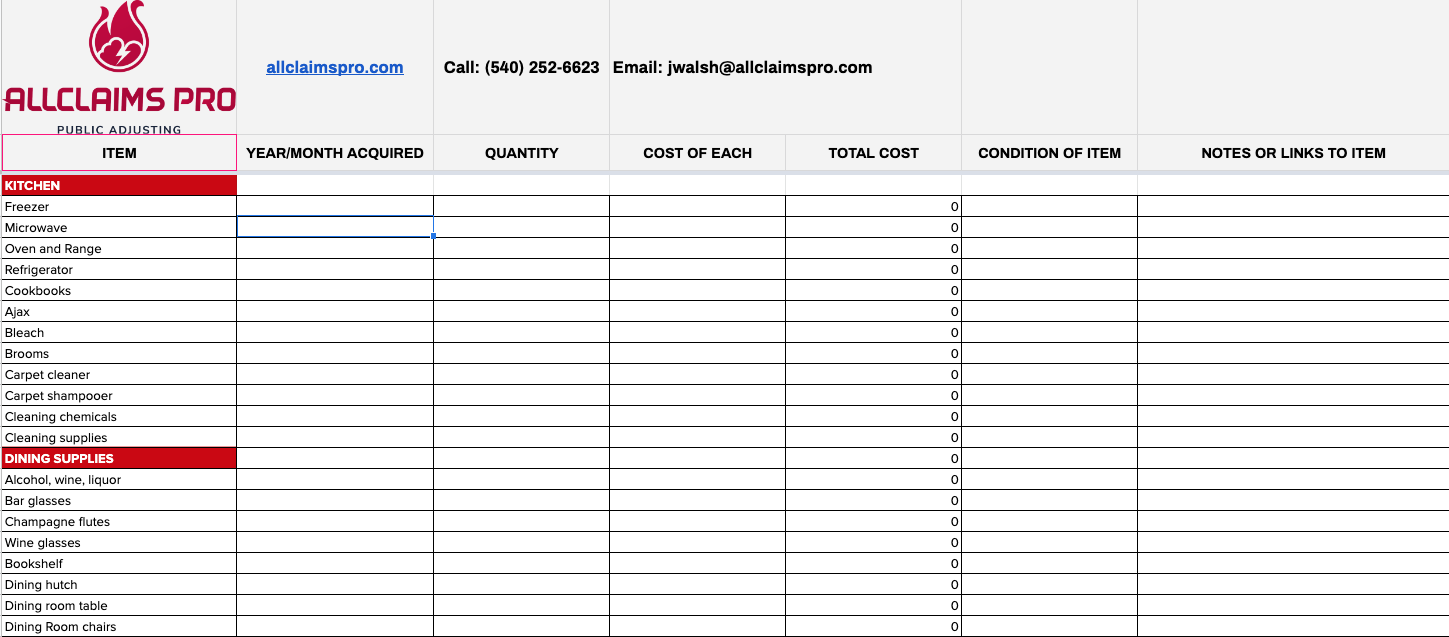
Itemized list of damaged or destroyed personal property including description, estimated age, and value; use our free Damage Inventory (500+ Items) Checklist for guidance.

Proof of ownership and value

Any receipts, warranties, appraisals, credit card records, or pre-damage photos.

Additional Living Expense receipts

Hotel stays, meals, storage, laundry, and other increased costs incurred while the property is uninhabitable

Professional assessments

Plumber reports, engineer evaluations, or contractor estimates supporting the cause and scope of loss

Damage Inventory (500+ Items) Checklist